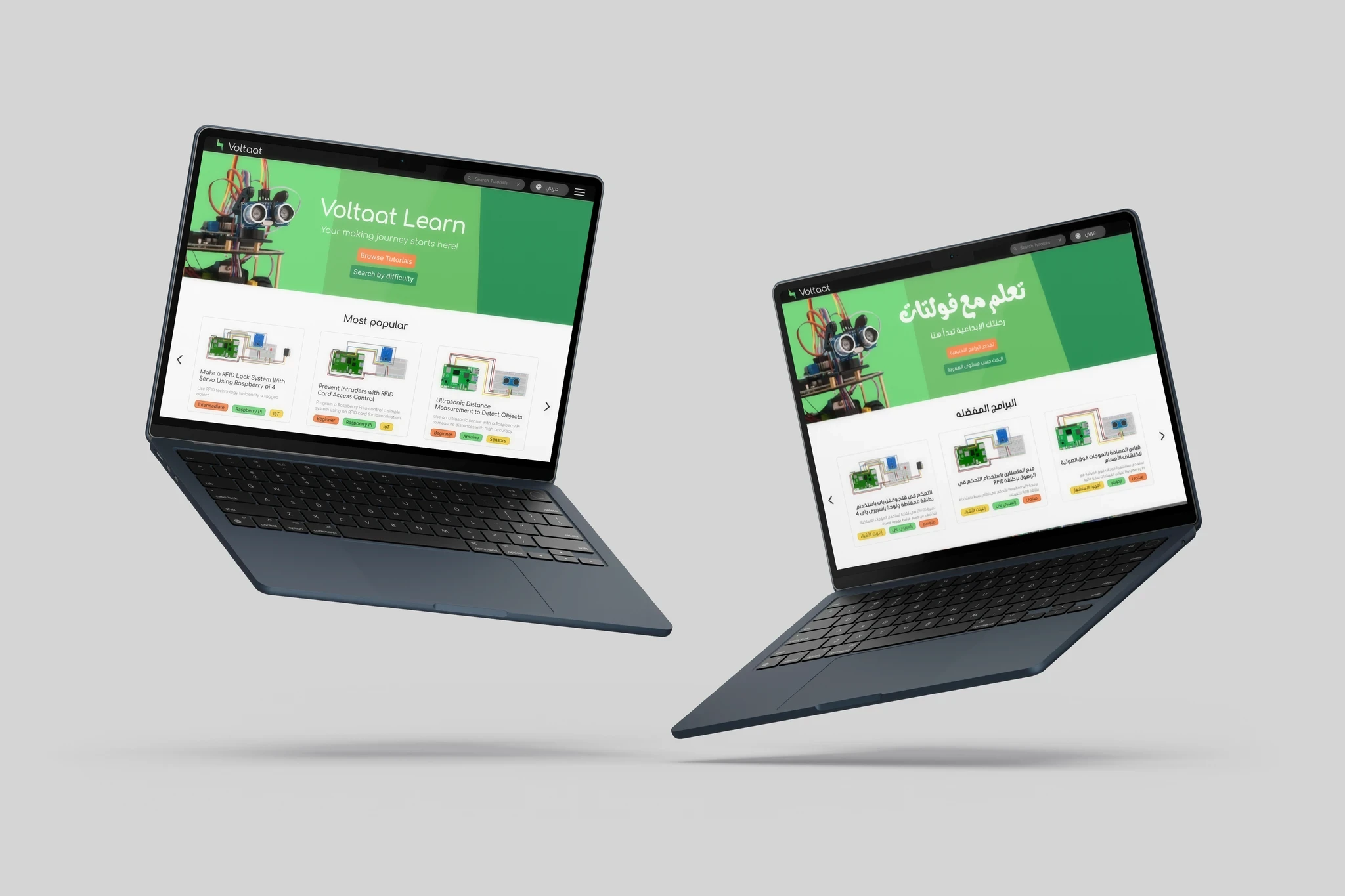
Voltaat
Maker hub for robotics kits and 3D printing hardware.
Product Design
Growth Strategy
UX Research
METHODS
Observational studies · Customer journey mapping · Environmental research
INDUSTRY
Edtech · Retail · Maker hardware
LOCATION
Doha, Qatar
In-store observational research and journey mapping that exposed a cultural gap between engineer assumptions and user reality, leading to a transformation in the retail environment, website, and product aesthetic built to empower the maker community.

From startup grit to scalable growth
Voltaat operated in the relatively small but incredibly fertile Qatari market. As they prepared to scale, they faced a difficult question. Should they expand to newer markets? Ones that came with their own challenges? Or should they expand outside of their own user base within the same market?
The second option seemed challenging since the data showed resistance from outside of the core user base. To the Voltaat team which consisted mainly of individuals with engineering backgrounds, this didn't make sense.
Voltaat's products were well-made and technically accessible.The products should feel intuitive to anyone interested in robotics or 3D printing, and yet they didn't.
To solve this problem, we asked the question: What is actually happening when customers encounter our products, and why does something designed to be accessible feel, to many, like it isn't for them?
Qatar presented a specific methodological challenge. In a high power-distance cultural context, direct research methods: interviews, focus groups, surveys, produce socially shaped responses. Participants defer to perceived authority. They give answers they believe are expected of them.
A Western UX research toolkit applied directly to this context would have produced misleading data. The methodology had to be designed around this constraint from the start, not retrofitted after the fact.
Additionally, there was a constraint most startups fall into: Voltaat was a small team. There was no budget for a formal research operation. The research had to be embedded in the business itself.
Designing for connection
The Bizarre Bazaar is an ethnographic UX research technique pioneered by Apala Lahiri Chavan. It involves building a simulated ecosystem that mirrors the user's local culture and economic environment, then observing how participants naturally browse, interact, and make decisions within it. Crucially, participants don't know they're in a research environment. The observation is of natural behaviour, not performed behaviour.
The Voltaat retail studio became that ecosystem.
Building the research environment We expanded the product offering beyond Voltaat's core robotics and 3D printing range to include IoT products and adjacent hardware, deliberately broadening the draw to bring in customer types we hadn't observed before. The store layout was redesigned to require customers to physically engage with products to navigate the space.
Observation Sessions were unmoderated. Researchers observed from within the store environment without identifying themselves as researchers. We tracked where customers moved, what they touched, where they stopped, what created hesitation, and what caused them to disengage.



Blending design and engineering
Finding 1: The products felt like they belonged to a different culture. The entire visual language of the products was imported from Western maker culture. There were no visual anchors connecting the products to the environment customers actually lived in. The products felt like they were made for someone else.
Finding 2: Customers felt intimidated by the products. Customers were signaling, through their body language and behavior, that they didn't see themselves as the kind of person these products were for. This was further reinforced by conversations with customers following their experience observing the products.
Finding 3: The local visual environment remained untapped. Qatar's architectural and design environment is rich with geometric abstraction and calligraphic motifs. No product in the local market was tapping into this aesthetic and as a result, the gap between the environment customers lived in and the world the products came from was highly apparent.
Finding 4: Expanding the product range worked as a research tool. The IoT expansion brought in customer segments who hadn't engaged with the core range. Observing how these new segments moved through the space gave us data we couldn't have gathered through direct recruitment.
The retail environment was redesigned around observed behaviour. Layout, product placement, and display hierarchy were rebuilt based on what the observation showed about natural movement patterns and the specific moments where customers disengaged.
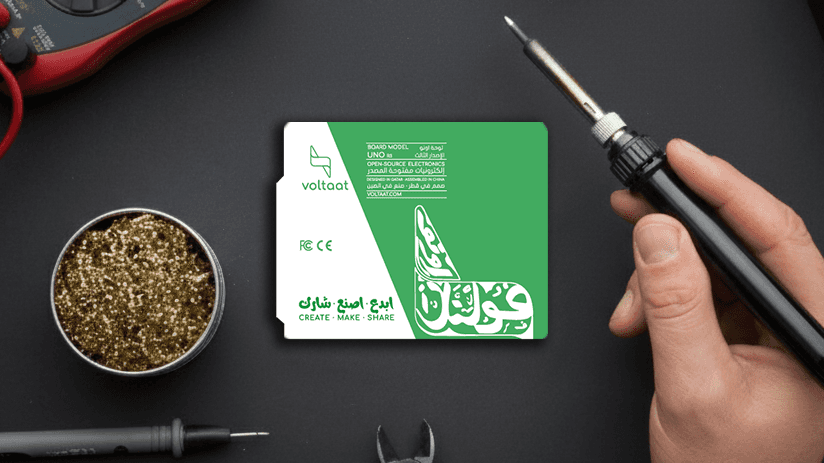
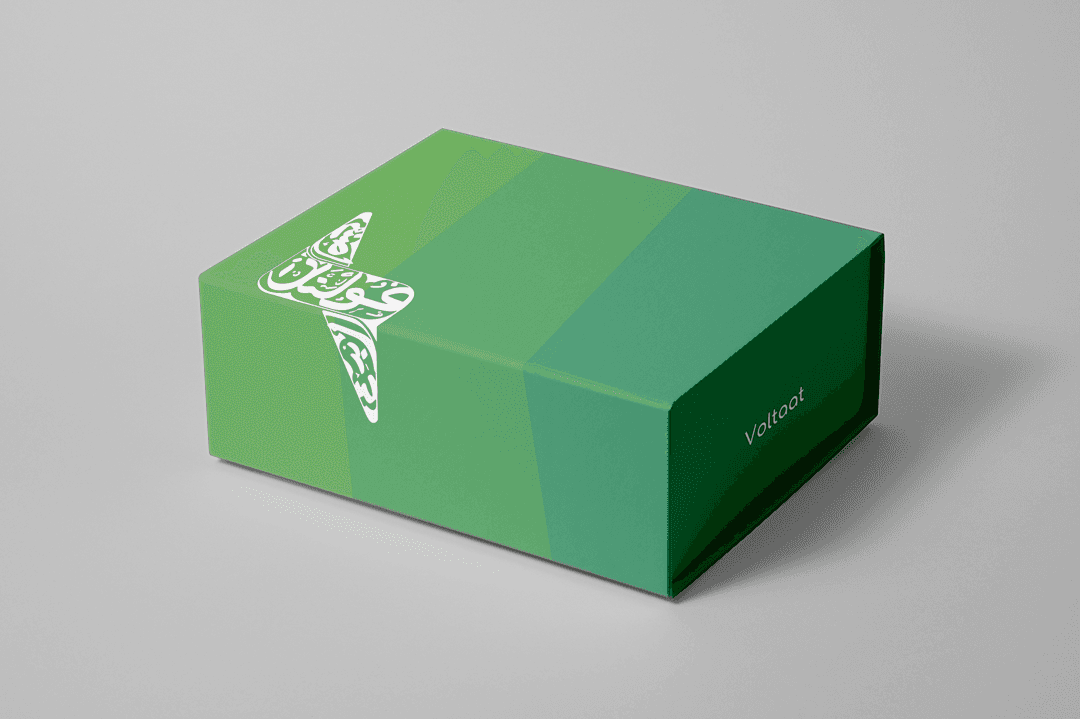
Calligraphic and geometric motifs were introduced into product design. This was the most direct application of the cultural dimensions analysis: borrowing the visual language of the architectural environment customers already lived in and integrating it into the product aesthetic. The goal was to make the products feel familiar and approachable to the customer.
Product selection was updated based on what different customer segments were actually reaching for versus what the team had assumed they'd want.

Bringing education to life
Outcomes
~35% growth in retail footfall following the environment redesign
2x revenue growth during the period of embedded research and design work
Second funding round secured, commercial trajectory directly informed by research-driven product and environment decisions
Products actively designed around cultural context for the first time in the local market