Prosthesis Device Design
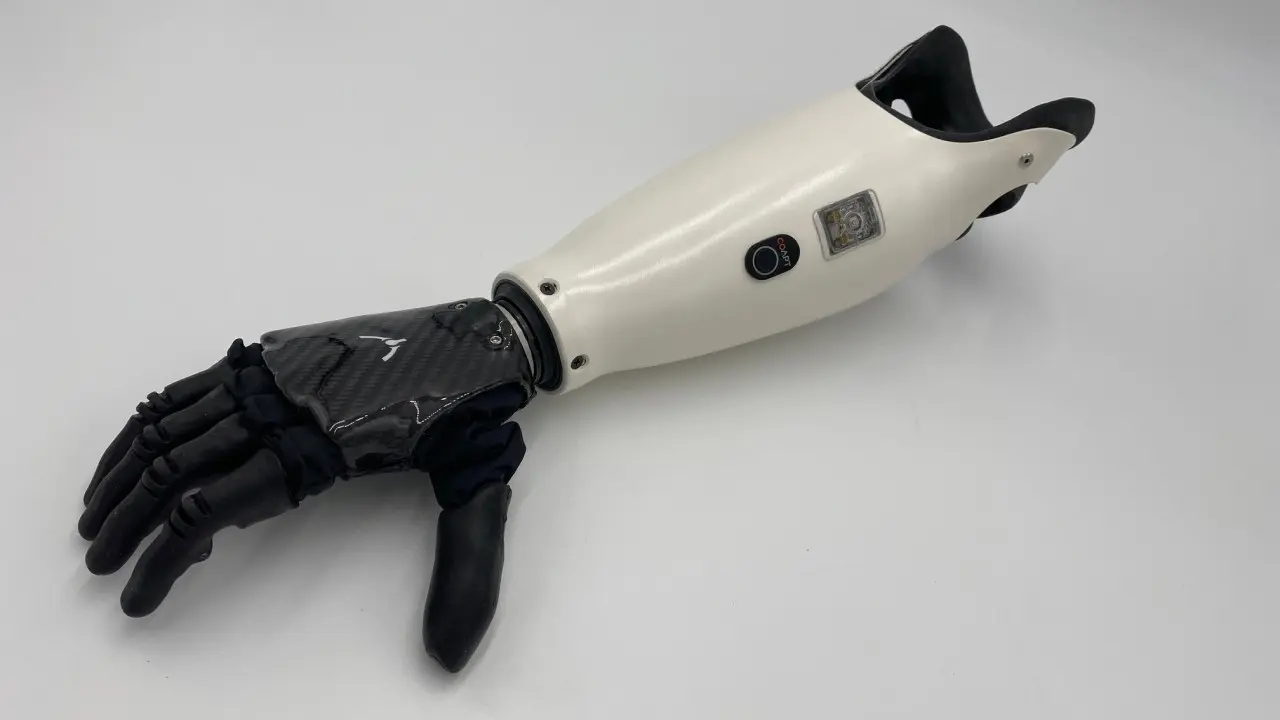
Limb replacement devices for the war-wounded.
Field Research
Mixed Methods
Humanitarian
METHODS
Ethnographic interviews · Focus groups · Usability testing · Survey design
INDUSTRY
Healthcare · Humanitarian
LOCATION
Doha, Qatar · Amman, Jordan
Collaboration between Qatar University and the International Committee of the Red Cross. This project includes field research with war-wounded refugees that exposed why prosthetics fail, informing device design and building the evidence base for a VR training programme to streamline adoption.
The problem
Upper-limb prosthesis abandonment rates in conflict-affected populations are significant. Published literature puts industry-wide rejection at 23–26% in adult populations, with some studies reaching 45% in children. Unfortunately, published research did not show the full story. In the harsh environment of a refugee camp, we hypothesized that extreme, unconventional factors might be influencing user bahavior.
We asked the question: What is actually causing prosthetic abandonment in this population, and what would need to change for users to benefit from their devices?
Context & Constraints:
Access: Entry to camps required coordination with the Qatar Red Crescent Society. Security protocols shaped where we could go, how long we could stay, and who we could approach.
Participant considerations: Participants were war-wounded individuals who had experienced significant trauma. Standard protocols needed rethinking for this context.
Infrastructure: No reliable internet, no private spaces, limited ability to record. Methods had to work without these assumptions.
Language and trust: Interviews were conducted in Arabic. Trust was built through Red Crescent intermediaries, direct recruitment produced less candid responses.
Ethical oversight: Conducted under Qatar University IRB approval and Red Crescent data protection standards.

Building towards a solution
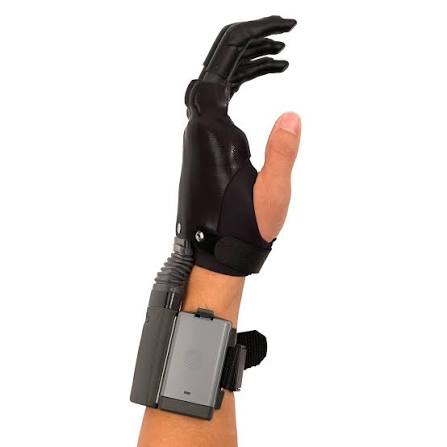
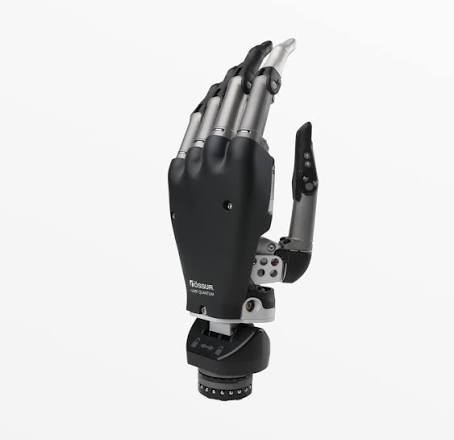
Finding 1: The devices initially deployed were not suitable for this context. The prosthetics deployed were heavy myoelectric devices: sophisticated technology that requires muscular signal control and significant clinical training to use effectively. For a population with no access to ongoing clinical support, they were functionally unusable in practice. The device choice had been made on clinical grounds without accounting for the actual use environment.
Finding 2: No one had asked about functional needs before fitting. Across our interview sample, almost none of the participants had been asked about their daily tasks, work requirements, or personal priorities before being assigned a device. Physiological fit had been considered; functional fit had not.
Finding 3: Training infrastructure was completely absent. Advanced devices had been provided with no guidance on how to use them. One participant, a young man in his twenties who had lost an arm and a leg, had been given a technologically sophisticated upper-limb prosthesis but had never received any training. He wore it for cosmetic reasons only and rarely used its functional capabilities.
Finding 4: The result was abandonment by default,. Participants weren't rejecting their devices. They were defaulting to not using them because using them was too difficult without support — compounded by devices that were the wrong fit for the context to begin with. A systems failure at two levels simultaneously.


Changing the build
The research exposed two parallel failures, which in turn, drove two parallel fixes.
The devices were replaced. The myoelectric prosthetics originally deployed were the wrong tool for this population: too heavy, too reliant on muscular signal control, too dependent on clinical training that didn't exist. The research made the case clearly enough to shift the brief at the device level. The team moved to lightweight 3D-printed prosthetics relying primarily on passive control — mechanically simpler, more robust in low-infrastructure settings, and achievable without specialist clinical support.
A training modality was designed from scratch. Even with better devices, users had no pathway to independent use. The research identified this absence as a primary driver of abandonment and pointed to what a solution would need to satisfy: work without internet connectivity, work without on-site clinical presence, and work for users with missing limbs who couldn't use standard VR controllers.
The response was a VR/AR training programme using hand-tracking rather than controllers, designed to run on low-cost headsets in low-connectivity environments. The programme was built specifically around the passive-control devices, making the two solutions complementary.
The research changed what was being built at the most fundamental level.


Outcomes
SUS 92.9/100 — System Usability Scale score, placing the programme in the top tier of usability benchmarks
Near-zero simulator sickness — SSQ-TS score of 2.43 ± 1.62, well below the threshold for concern
Product brief reoriented — findings shifted the roadmap from device redesign to training infrastructure
Published: Mazhar, Gaballa et al. — Virtual Reality Hand Tracking for Immersive Telepresence in Rehabilitative Serious Gaming (2024)
Published: Gaballa, A. et al. — Extended Reality for Prosthesis Training of Upper-Limb Amputees — IEEE, 2022
Patent: US 11,229,534, January 2022
Reflection
The most important methodological lesson from this project was about recruitment. Participants who came through trusted Red Crescent intermediaries were more open, more specific, and gave richer accounts of their experience. Direct recruitment produced more guarded responses.
If I were running this study again, I'd invest significantly more time in the intermediary relationship before any participant contact. The quality of the research was directly proportional to the quality of the trust infrastructure around it.
I'd also push harder earlier to separate the research question from assumed solutions. The findings pointed to two problems: wrong device type and absent training. Surfacing both took longer than it should have because the project brief had pre-loaded assumptions about what the answer would look like. Earlier separation between research and solution framing would have accelerated both pivots.